


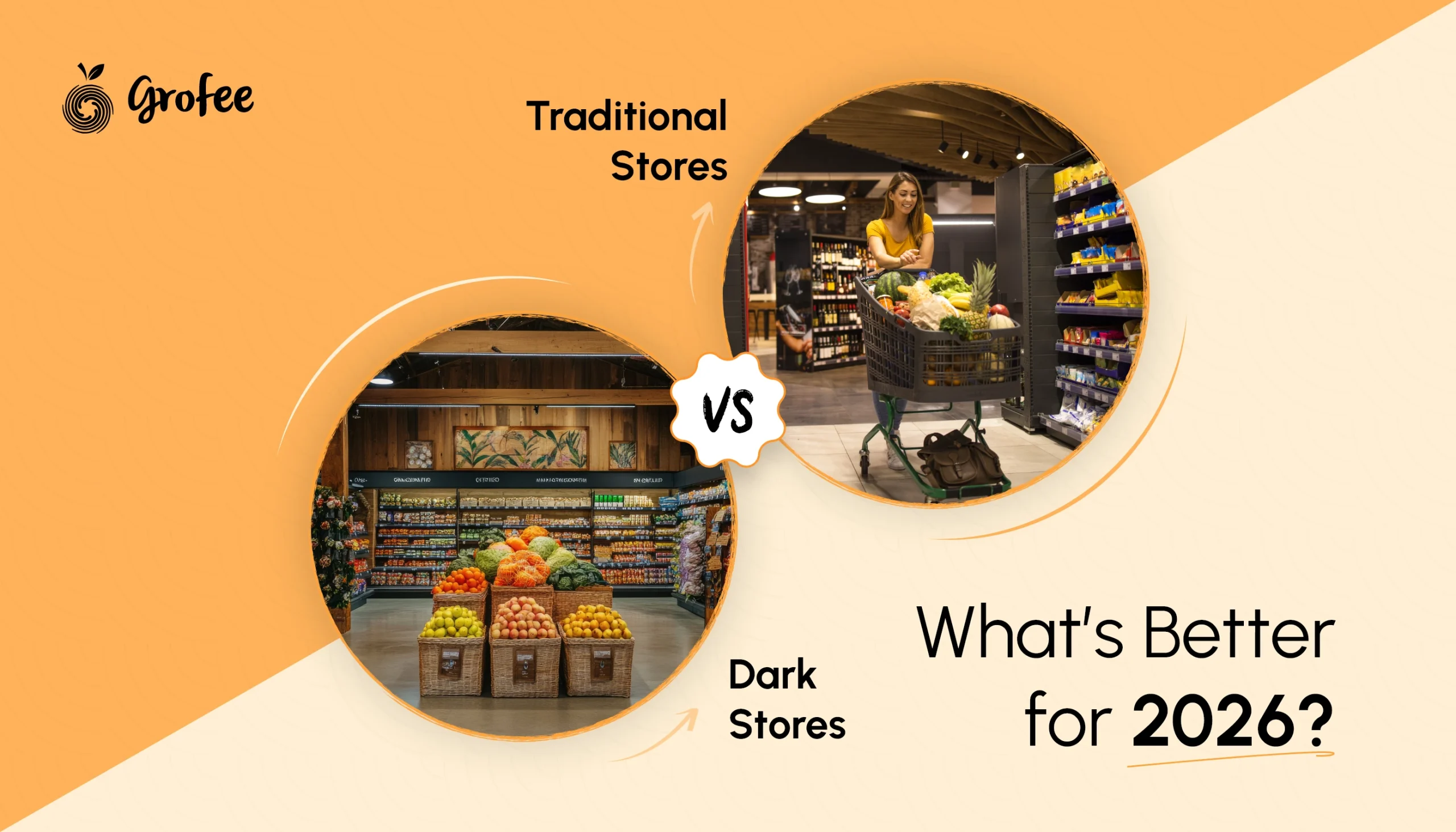
Dark Stores vs Traditional Stores- Which Model Wins in 2026?
The grocery business is going through a major transformation and 2025 is turning into an important year for retailers of all sizes.
As customers expect faster deliveries, smooth app experience and easy ways to shop from home, a new debate has emerged- should grocery brands rely on the familiarity of traditional stores or shift toward dark stores built for fast online fulfillment?
Supermarkets, neighborhood grocery shops and modern retail chains are all asking the same thing – which model will serve customers better and stay profitable in the long run?
If you’re exploring the future of grocery retail or planning to launch your own online grocery app, this guide breaks down what both models offer, their real advantages and which approach is better suited for 2025.
What Are Traditional Stores?
Traditional stores are the supermarkets, neighborhood grocery stores, minimarts and hypermarkets we’ve grown up with. They’re designed for walk-in customers, physical shopping and on-the-spot product selection.
Customers visit, browse aisles, pick products and queue for billing. Businesses depend heavily on footfall, store layout and merchandising to drive sales.
Key Advantages of Traditional Stores
- Immediate product inspection- Customers see, touch and check freshness before buying.
- Personal connection- Grocery stores often build trust over years.
- Impulse purchases- Store aisles encourage unplanned buying.
- Local loyalty- Shoppers prefer stores familiar with their preferences.
Key Limitations
- Limited inventory space due to real estate constraints.
- Higher operational costs (rent, electricity, staff).
- No 24/7 operations unless it’s a large chain.
- Reduced convenience compared to a grocery shopping app that delivers to the doorstep.
What Are Dark Stores?
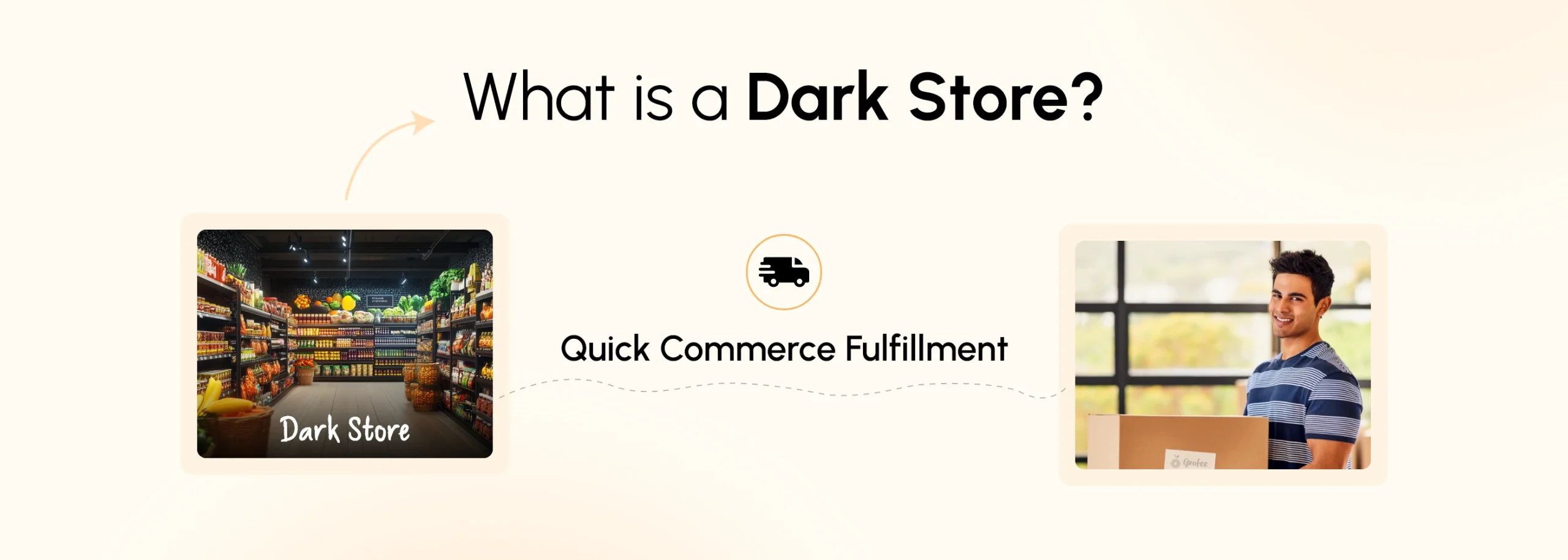
Dark stores are mini-warehouses designed exclusively for online orders. There are no walk-in customers – only pickers, packers, and delivery partners.
Think of them as hybrid hubs between a warehouse and a retail shop, optimized for speed and accuracy.
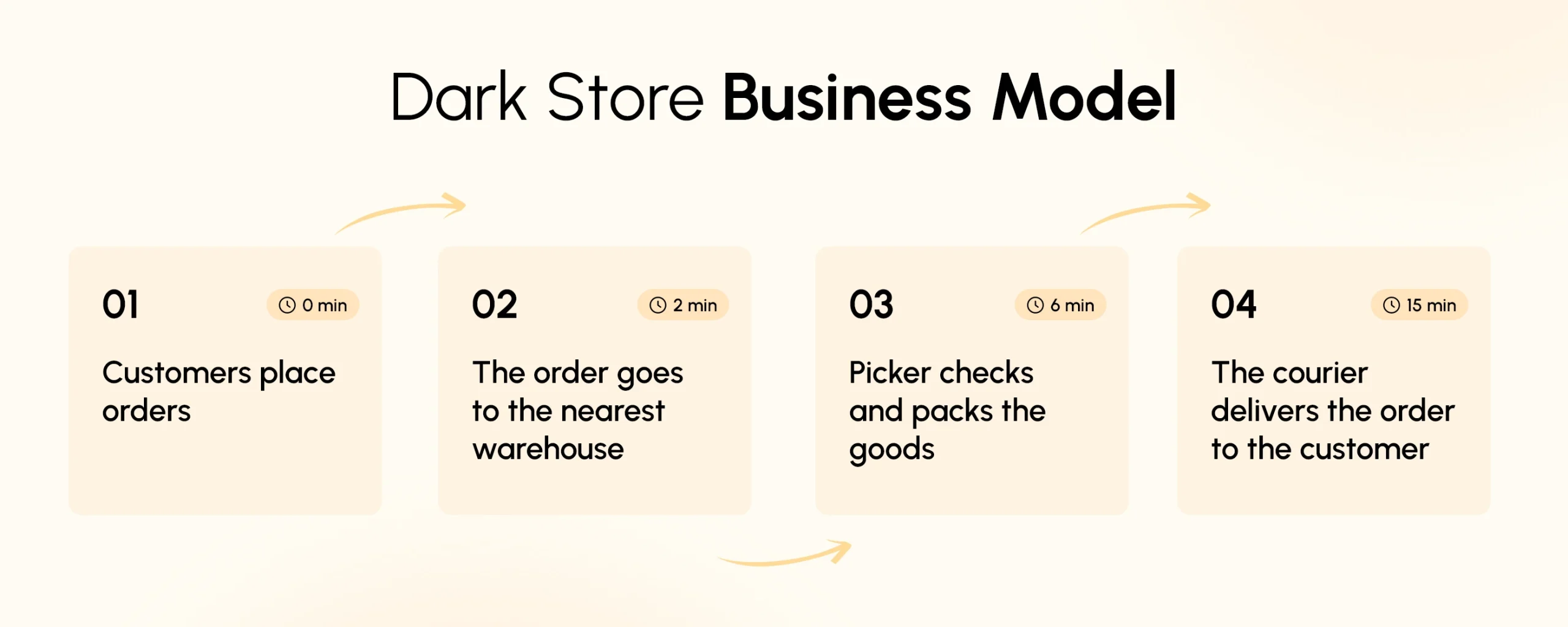
How Dark Stores Work
- Customers order through an online grocery app
- Inventory is pre-mapped and organized for fast picking
- Orders are packed within minutes
- Delivery partners ship them in under 10–20 minutes (in many cities)
Why Dark Stores Are Booming in 2025
- Ultra-fast delivery expectations set by Blinkit, Walmart Grocery, Zepto, Instacart and Instamart
- Post-pandemic shift to contactless shopping
- Data-driven inventory based on neighborhood demand
- Higher order accuracy with digital picking systems
Why This Choice Will Shape Retail Growth in 2026
The grocery market has changed dramatically-
- 74% of millennials prefer buying groceries online
- 45% customers say best grocery app convenience beats store visits
- Rising fuel, rent, and labor costs are squeezing traditional retail margins
- “Need it now” culture demands 20–40 minute deliveries
- Retailers want scalable, tech-enabled, cost-efficient models
This shift is forcing retailers, entrepreneurs, and supermarkets to rethink how they serve customers.
Should you invest in a dark store?
Or modernize your traditional store with omnichannel capabilities?
Or launch your own white label grocery delivery app like Grofee?
Let’s break it down.
Traditional Stores- Strengths & Weaknesses
Strengths
- Relationship-Driven Customer Experience
Customers can touch, feel, compare, and personally evaluate products — especially produce. This builds trust.
- Great for Local Communities
Neighborhood stores are still the backbone of grocery shopping in many countries.
- Impulse Purchases Are Higher
Retailers earn big from last-minute add-ons like chocolates, snacks, or new products.
- No Delivery Costs
Customers pick up themselves – saving brands delivery logistics.
Weaknesses
- Limited by Geography
You can only sell to customers within a small radius of your shop.
- Higher Operating Costs
Rent, display shelves, merchandising, parking space, staff, electricity – all add up.
- Inefficient for Online Orders
When orders from a grocery shopping app delivery service come in, the picking process is slow and error-prone.
- Stock Visibility Issues
Overstocking and understocking are common, reducing efficiency and profitability.
Dark Stores- Strengths & Weaknesses
Strengths
- Ultra-Fast Fulfillment
Dark stores are built for efficiency. Each second is optimized — from picker routes to shelf arrangement.
- Higher Order Accuracy
Technology tracks inventory in real time, resulting in fewer replacement calls or “item not available” experiences.
- Lower Operational Cost
No need for decorative layouts, wide aisles, or fancy lighting. Everything is functional.
- Perfect for Online Growth
Dark stores operate like micro-fulfillment centers, ideal for the booming demand for best app to order groceries offerings.
Weaknesses
- Zero Walk-In Traffic
You lose local customers who prefer in-person shopping.
- Heavy Reliance on Logistics
Deliveries need fast riders, optimized routes, and reliable systems.
- High Upfront Setup Costs
Setting up multiple dark stores across a city may require investment.
- Unsuitable for Certain Products
Some items that sell well in-store (impulse snacks, seasonal offers) may underperform online.
Are Dark Stores Better Than Traditional Stores?
The answer isn’t “either-or.” In 2025, the winning model is hybrid-
Traditional stores + Dark store operations + Online grocery app presence
Here’s why-
- Customers still value in-person shopping, especially for produce
- But they want fast home delivery for everyday essentials
- Retailers want to expand beyond a 5 km radius
- Online grocery searches for “best grocery app” are hitting all-time highs
- Delivery-first behavior (Nudges, reminders, one-tap repeat orders) drives retention
- Dark stores reduce cost while traditional stores add community value
Brands that combine the speed of dark stores and the trust of traditional retail will dominate.
What is Phygital Grocery Retail?
Phygital = Physical Stores + Digital Ordering + Fast Delivery
This approach gives customers-
- Walk in
- Browse online
- Schedule delivery
- Track orders
- Access better pricing
- Earn loyalty rewards
- Pick their preferred delivery slot
This model is exactly why retailers are investing in grocery store delivery app platforms.
How Retailers Should Decide Between Dark Stores and Traditional Stores?
Here’s a quick comparison to help you decide-
| Factor | Traditional Stores | Dark Stores |
| Speed | Slow fulfillment | Fast delivery |
| Customer reach | Local only | City-wide |
| Setup cost | Moderate | Medium–High |
| Operations | In-person experience | Online efficiency |
| Best for | Community selling | High-volume online orders |
But the real transformation happens when businesses combine both models and upgrade with technology.
For example-
- A grocery store using Grofee to accept orders digitally
- A supermarket chain creating mini dark stores in high-demand zones
- A grocery startup launching a grocery shopping app first, then adding physical points
- Retailers creating loyalty programs inside an online grocery app
The future is hybrid, tech-enabled & customer-first.
Conclusion- Dark Stores vs Traditional Stores – Who Wins?
If we’re talking purely speed and online expansion?
Dark Stores win.
If we’re talking trust, walk-in experience, and local familiarity?
Traditional Stores win.
But if we’re talking business growth in 2025, customer loyalty, scaling to new areas, and high-margin operations?
Hybrid + Technology wins. Every time.
Businesses that combine a traditional presence with dark store fulfillment — powered by their own online grocery app — will lead the grocery revolution over the next decade.
If Your Customers Are Online, Your Store Should Be Too
Start with GrofeeFrequently Asked Questions
Dark stores usually operate with lower rent, faster order processing, and higher delivery volumes, making them more profitable in dense urban areas. However, traditional stores can still outperform in regions where walk-in demand and personal relationships drive sales. Profit depends on location, demand and operational efficiency.
Yes. Even small neighborhood stores can set up a micro–dark store using a compact space. With the right online grocery app proper inventory mapping and delivery setup, small stores can fulfill online orders quickly without needing a large warehouse.
Most urban customers prefer app-based shopping for speed, convenience, and delivery. However, many still prefer visiting traditional stores for fresh produce and instant inspection. This is why hybrid models are becoming the most successful approach in 2025.
At minimum, you need a grocery delivery app, inventory management, order tracking, picker dashboards and delivery partner apps. A white label grocery delivery app like Grofee combines all these tools into one platform so you don’t need separate systems.
Not anymore. With white-label solutions like Grofee, businesses can launch a branded grocery app at a fraction of custom development cost. You only pay for setup and features you need making it affordable for both small shops and supermarket chains.
Recent Blogs
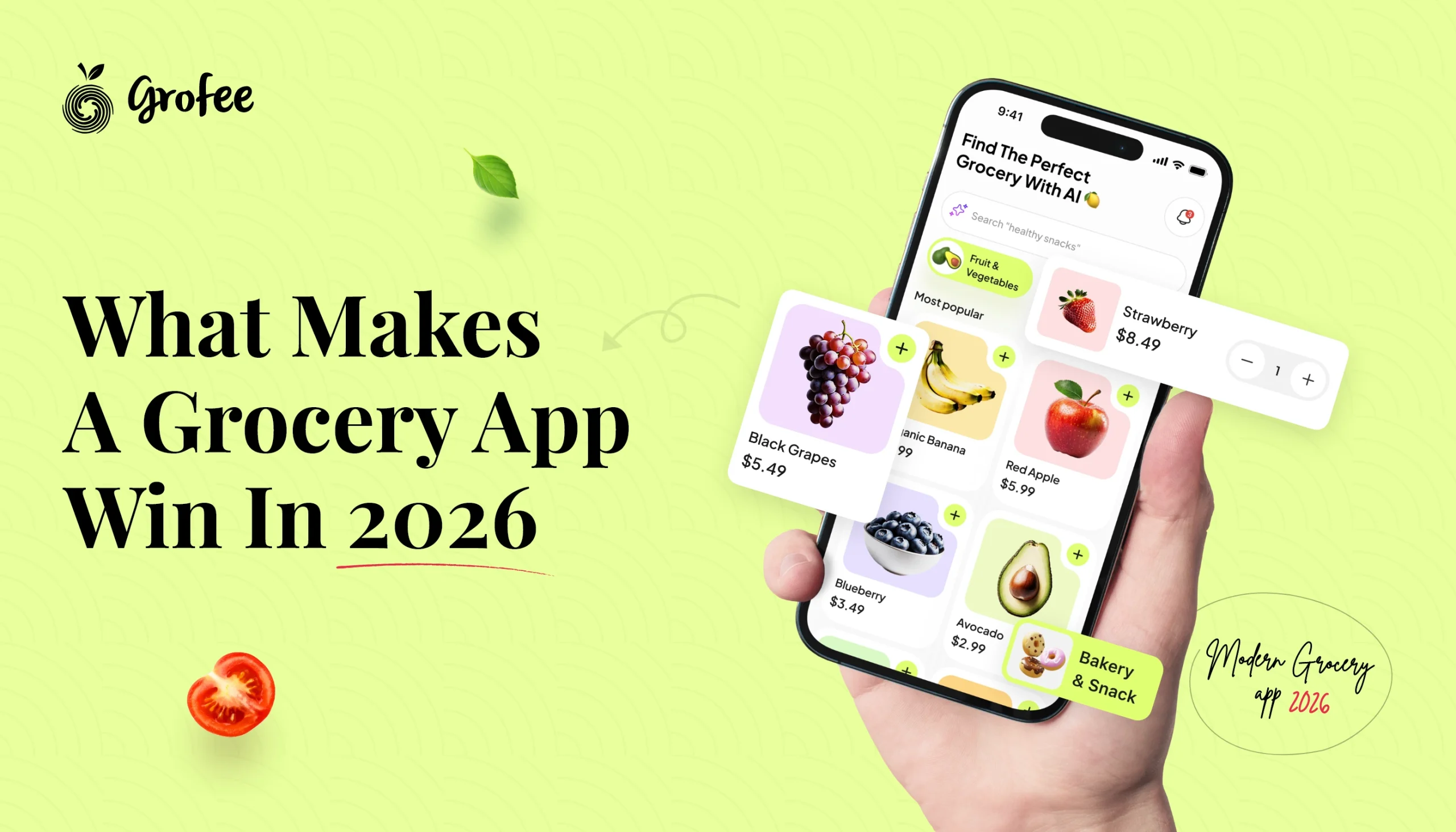
The grocery delivery business is no longer just about convenience. By 2026, it will be a matter of how intelligently a grocery platform can understand users,... Read more
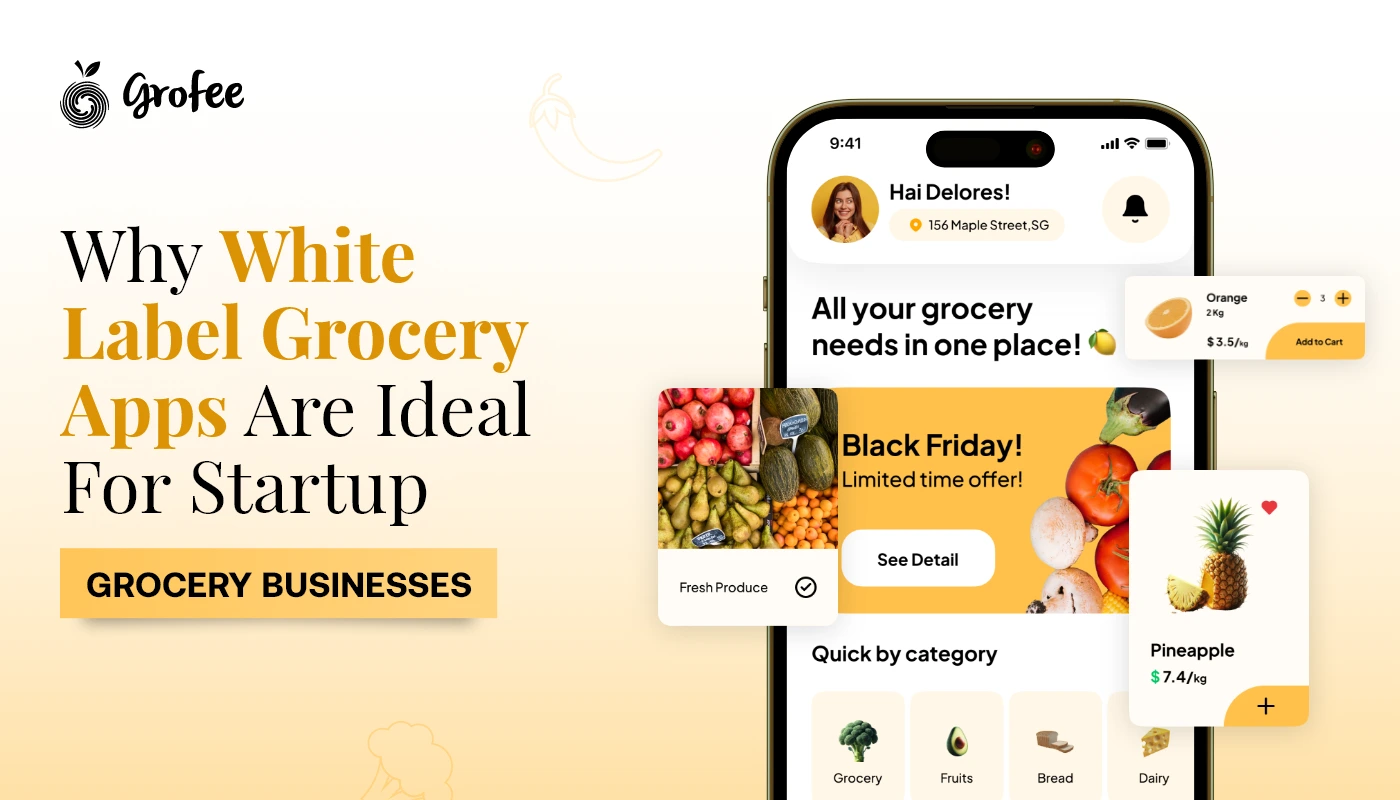
The online grocery market continues to evolve rapidly, but for startups entering this space, technology remains one of the biggest hurdles. Building a grocery delivery... Read more

In 2025, grocery delivery isn’t just about convenience it’s about speed, precision & personalization. The world’s fastest-growing retail segment, quick commerce (Q-commerce), is redefining how... Read more
Set Up An Online
Grocery Supermarket
With Grofee
Build an extensive product catalogue, enable your customers to place orders from your Mobile App or Web and start selling quickly.