


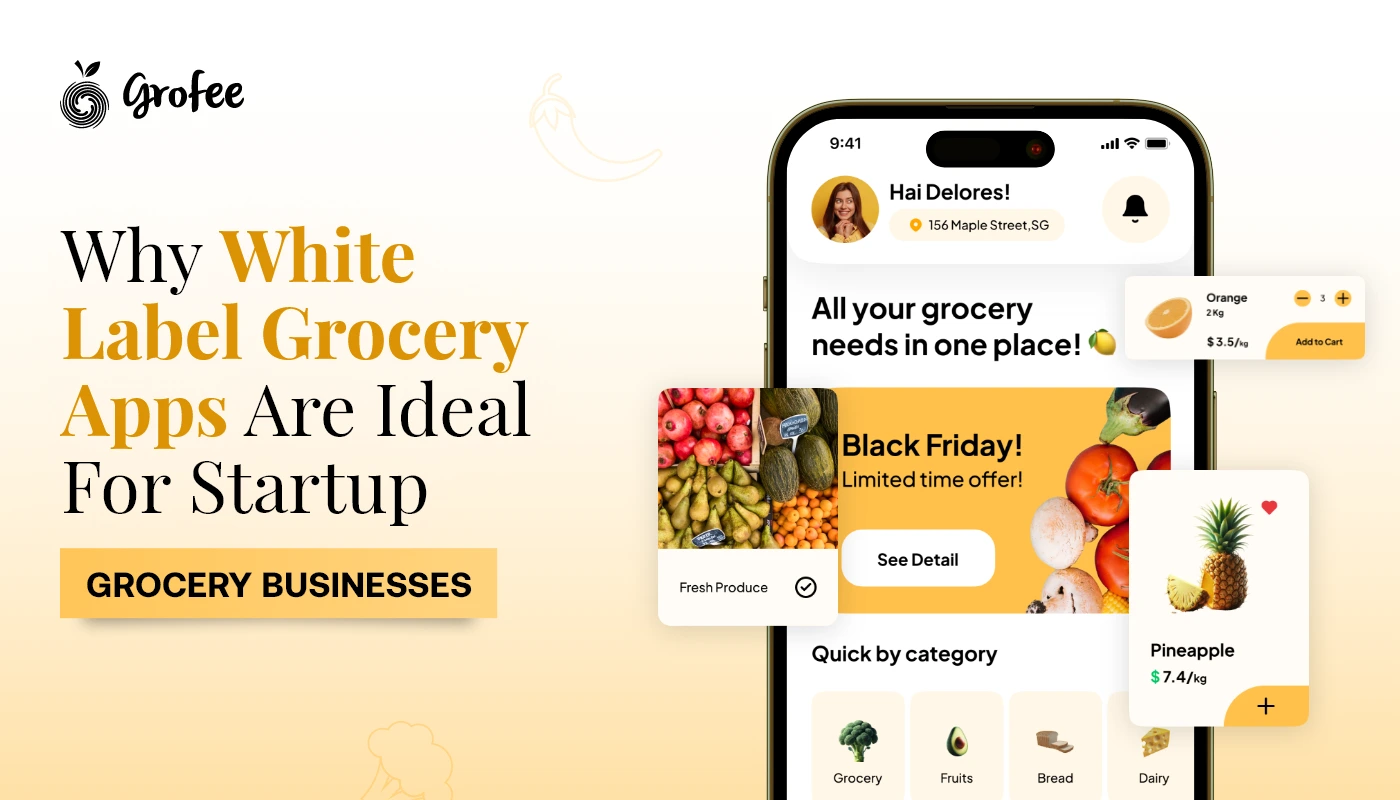
How White-Label Grocery Apps Help Startups Reduce Tech Costs and Scale Faster
The online grocery market continues to evolve rapidly, but for startups entering this space, technology remains one of the biggest hurdles. Building a grocery delivery platform from scratch demands significant investment, long development timelines, and continuous maintenance. For many founders, the real concern isn’t validating demand-it’s understanding how to reduce development costs without compromising scalability or product quality.
This is where a white label grocery delivery app has become a strategic advantage for modern startups. Instead of spending months engineering a complex platform, startups can launch faster, operate leaner, and scale with confidence using a ready-to-deploy solution.
In this blog, we explore how white-label grocery apps reduce development costs, help startups scale faster, and provide a future-ready technology foundation.
The Real Technology Challenge for Grocery Startups
Launching a grocery delivery startup involves far more than creating a customer-facing app. Behind every successful platform is a complex technology ecosystem that includes:
- Real-time inventory management
- Order processing and fulfillment workflows
- Multiple payment gateways
- Delivery management and tracking
- Admin dashboards and analytics
- Vendor or store management tools
- Cloud hosting, security, and uptime monitoring
For startups attempting to build all of this independently, grocery app development cost can escalate quickly. Beyond the initial build, there are recurring expenses tied to bug fixes, infrastructure scaling, security compliance, and ongoing feature upgrades.
This raises a common founder question: is it better to build a grocery app from scratch or use a white-label platform?
In most early-stage scenarios, the technical complexity and long-term cost burden make custom builds risky-pushing startups toward on-demand grocery app solutions that eliminate unnecessary overhead.
What Is a White-Label Grocery App?
A white label grocery platform is a pre-built, customizable grocery delivery system that startups can brand and launch as their own. Instead of developing core features from the ground up, businesses gain access to a ready-made ecosystem that includes customer apps, admin panels, vendor dashboards, and automation tools.
A white label ecommerce grocery app allows startups to stay focused on operations, customer acquisition, and partnerships-while the underlying technology is already tested, scalable, and market-ready.
In simple terms, white-label platforms answer a critical startup concern: how long does it take to launch a grocery delivery app without heavy engineering investment?
With the right solution, it can be weeks-not months.
How White-Label Grocery Apps Reduce Technology Costs
- Eliminating Custom Development Expenses
Custom grocery platforms require full engineering teams-developers, designers, QA engineers, and DevOps specialists. Salaries, infrastructure costs, and prolonged development cycles significantly inflate the grocery app development cost.
White-label platforms directly address the question “How do white-label grocery apps reduce development costs?” by replacing years of development work with a proven, production-ready solution. Startups avoid duplicating common features and pay only for customization and deployment.
- Lower Maintenance and Upgrade Costs
Maintaining a grocery delivery platform is ongoing work. Security updates, new OS versions, payment gateway changes, and feature enhancements all add recurring costs.
With a cloud-based grocery delivery app, platform maintenance and upgrades are handled centrally, allowing startups to avoid expensive in-house technical teams.
- Predictable Technology Budgeting
White-label platforms typically operate on fixed pricing or licensing models. This makes financial planning easier compared to unpredictable development and maintenance expenses associated with custom builds.
For founders managing limited capital, predictable tech spending is critical to long-term survival.
Faster Market Entry with White-Label Platforms
Speed is a competitive advantage in the grocery space. Consumer habits change quickly, and delays in launch often mean lost market opportunities.
This leads to a common question – Can startups scale faster using a ready-made grocery delivery app?
The answer is yes – because white-label solutions enable startups to:
A launch grocery delivery app fast approach enables startups to:
- Test new markets quickly
- Validate business models early
- Begin generating revenue sooner
- Iterate based on real user feedback
With a grocery delivery app for startups, founders can move from concept to live operations in weeks rather than months.
Built-In Scalability from Day One
Growth often breaks poorly designed systems. Startups that build custom solutions sometimes struggle when order volumes increase or when they expand to new locations.
A scalable grocery delivery software solution is designed to handle growth automatically. Features such as cloud hosting, load balancing, and modular architecture ensure that performance remains stable as demand increases.
This scalability is especially important for startups planning multi-city expansion or onboarding multiple local vendors.
Automation That Reduces Operational Overhead
Operational efficiency is just as important as customer acquisition. Manual processes slow down fulfillment, increase errors, and raise staffing costs.
Modern grocery app automation tools streamline:
- Order routing and status updates
- Inventory synchronization
- Delivery assignment and tracking
- Notifications for customers and vendors
- Reporting and analytics
By automating daily workflows, startups can operate lean teams while maintaining service quality.
Supporting Multiple Grocery Business Models
One of the biggest advantages of white-label platforms is flexibility. A robust grocery delivery startup technology stack supports multiple business models, including:
Local Store Delivery
A grocery app for local stores helps neighborhood retailers digitize operations and compete with larger platforms without paying aggregator commissions.
Multi-Vendor Marketplaces
Startups can onboard multiple grocery vendors, manage commissions, and offer customers wider product choices.
Hyperlocal Delivery
White-label platforms support zone-based delivery, real-time availability, and rapid fulfillment-key for urban grocery startups.
Subscription and Scheduled Delivery
Recurring orders for essentials improve customer retention and predictable revenue.
These models align well with emerging grocery delivery business model 2026 trends focused on convenience, personalization, and operational efficiency.
Cloud-Based Architecture for Reliability and Growth
A cloud-based grocery delivery app ensures high availability, data security, and scalability without heavy infrastructure investments.
Cloud infrastructure enables:
- Faster performance across regions
- Automatic backups and disaster recovery
- Secure data handling and compliance
- Easy feature rollouts
For startups, cloud-based solutions remove the burden of server management and allow teams to focus on business growth.
Improved Time-to-Value for Startups
White-label solutions significantly reduce the time it takes to see real results. Instead of spending months perfecting software, startups can invest early in:
- Marketing and customer acquisition
- Vendor partnerships
- Logistics optimization
- Brand positioning
This faster time-to-value is crucial in competitive grocery markets where customer loyalty forms quickly.
Preparing for the Future of Grocery Delivery
The grocery industry continues to evolve with AI-driven recommendations, predictive inventory planning, and smarter logistics. Startups using a flexible on-demand grocery app solution are better positioned to adopt these innovations without rebuilding their platforms.
White-label platforms allow startups to stay technologically relevant while controlling costs and complexity.
Why White-Label Grocery Apps Make Strategic Sense
For founders evaluating build-vs-buy decisions, white-label solutions offer a clear advantage:
- Lower upfront investment
- Faster launch timelines
- Scalable architecture
- Automated operations
- Support for multiple business models
In a market where margins are tight and competition is intense, these benefits often determine whether a grocery startup survives and grows.
Final Thoughts
Technology should enable growth, not slow it down. For grocery startups navigating limited budgets, operational complexity, and competitive pressure, a white label grocery delivery app provides a proven foundation for success.
By choosing a white label ecommerce grocery app, startups can reduce risk, optimize costs, and scale faster-while staying focused on what truly matters: customers, partners, and long-term business growth.
As grocery delivery continues to evolve toward 2026 and beyond, white-label platforms are no longer just an option-they are becoming the default strategy for smart, scalable grocery startups.
Launch Your Grocery Startup Faster with Grofee
Explore Grofee for Your Grocery BusinessFrequently Asked Questions
Grocery apps automate daily work like order processing, inventory updates, delivery tracking, and customer notifications. This reduces manual work, speeds up operations, and helps teams manage more orders with fewer people.
Yes. White-label grocery apps are built to manage multiple stores from one system. Each store can have its own products, prices, inventory, and delivery zones while being controlled from a single dashboard.
They save money by avoiding custom development, reducing maintenance costs, and eliminating the need for large tech teams. Startups pay less upfront and avoid ongoing engineering expenses.
White-label grocery apps can be customized with your brand name, logo, colors, features, and workflows. You get your own branded app without building everything from scratch.
Yes. Most white-label platforms integrate easily with POS systems, payment gateways, wallets, and online payments, making order and payment management smooth and accurate.
Startups mainly need cloud-based infrastructure, reliable internet, and a scalable app platform. White-label solutions already include this, so startups don’t need to manage servers or complex systems.
White-label grocery apps use cloud scaling, load balancing, and automation to handle high order volumes. This keeps the app fast and stable even during busy hours or peak demand days.
Recent Blogs
Many local grocery stores begin to sell their products by taking online orders through WhatsApp because it is easy and familiar. Customers can send their... Read more
The way people shop for groceries has changed faster than ever. What used to be a simple list-based purchase is now a highly personalized, digital... Read more
Over the past few years, purchasing of groceries has changed significantly. A weekly trip to the store has been replaced with a few taps on... Read more
Set Up An Online
Grocery Supermarket
With Grofee
Build an extensive product catalogue, enable your customers to place orders from your Mobile App or Web and start selling quickly.